Golden Teacher Mushrooms Psychedelic Science and Effects
· based on the channel Shroomverse
Understanding Golden Teacher Mushrooms and Their Name
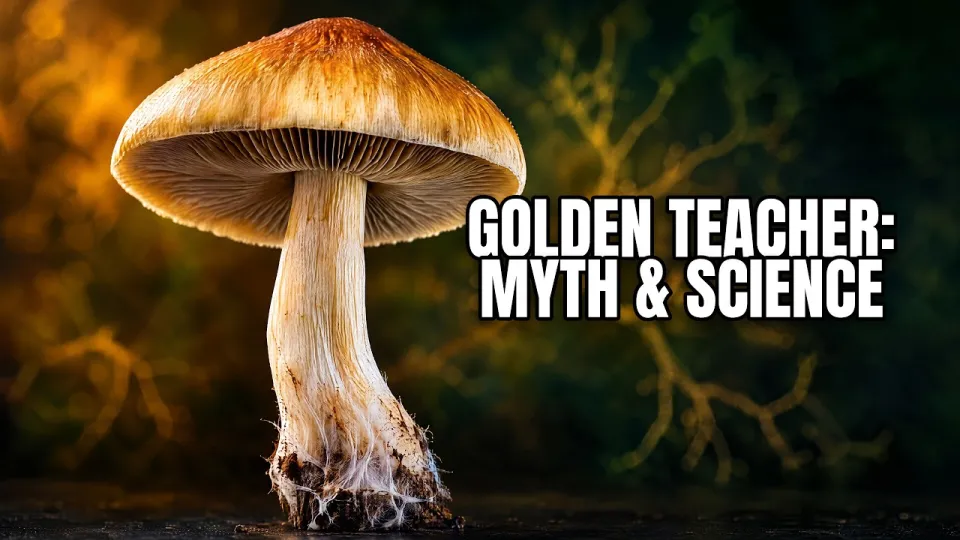
Golden Teacher mushrooms are a widely recognized variety of psilocybin-containing psychedelic mushrooms. The name "Golden Teacher" reflects their golden cap coloration and the cultural notion that these mushrooms provide insightful or enlightening psychedelic experiences. However, this label is informal and does not correspond to a unique scientific species classification. The exact lineage and taxonomy of Golden Teacher mushrooms remain uncertain, as community names often differ from formal mycological taxonomy.
Taxonomy, History, and Community Naming
Unlike formally classified species, Golden Teacher mushrooms are primarily identified by cultivators and enthusiasts rather than mycologists. This mushroom strain likely belongs to the species Psilocybe cubensis, but the term "Golden Teacher" refers more to a cultivated phenotype than a distinct taxonomic variety. The origins of the name are unclear, with limited historical records. Community-based naming conventions reflect traits like cap color and growth patterns, but do not guarantee consistent genetic or chemical profiles.
Chemistry of Golden Teacher Mushrooms and Psychedelic Effects
Golden Teacher mushrooms contain the psychoactive compounds psilocybin and psilocin, which are responsible for their psychedelic effects. Psilocybin is metabolized into psilocin in the body, which then binds primarily to serotonin 5-HT2A receptors in the brain. This interaction alters neural activity, leading to changes in perception, cognition, and self-awareness. Brain imaging studies show that psilocybin reduces activity in certain brain networks related to the sense of self, contributing to experiences of ego dissolution and altered consciousness.
Chemical Variation and Blue Bruising
The chemical composition of Golden Teacher mushrooms can vary significantly depending on growing conditions, substrate, and genetic factors. Levels of psilocybin and psilocin are not fixed, so potency and effects may differ between samples. A common feature is the blue bruising that appears when the mushroom tissue is damaged. This blue coloration results from the oxidation of psilocin, but it does not reliably indicate higher potency or stronger effects.
Clinical Research and Psychedelic Therapy
Most clinical trials investigating psilocybin focus on standardized, pharmaceutical-grade compounds rather than whole mushrooms or specific strains like Golden Teacher. These studies combine psilocybin administration with psychological support to explore therapeutic potential in conditions such as depression, anxiety, and PTSD. While Golden Teacher mushrooms share the active compounds studied in clinical settings, the variability in natural samples means the experiences and effects can be less predictable.
Myths, Expectations, and Evidence
Many beliefs around Golden Teacher mushrooms stem from cultural lore and user reports rather than rigorous scientific evidence. The notion that a named mushroom guarantees a specific psychedelic experience or consistent chemistry is misleading. Expectation, set, and setting, as well as individual biology, heavily influence psychedelic outcomes. Current evidence emphasizes the importance of controlled dosing and supportive environments for safe and effective use.
Conclusion
Golden Teacher mushrooms are a popular and culturally significant variety of psilocybin mushrooms known for their distinctive golden caps and reputation for insightful psychedelic experiences. However, their taxonomy is informal, and chemical composition can vary widely. Scientific research focuses on the active compounds psilocybin and psilocin, which alter brain function and perception. Myths about potency and effects should be approached critically, recognizing the role of biology, culture, and context. The Shroomverse channel provides a thorough educational exploration of these topics, helping to separate fact from fiction in the world of psychedelic mushrooms.
Key takeaways
- Golden Teacher is a popular psilocybin mushroom strain with uncertain historical taxonomy
- Psilocybin and psilocin interact with brain serotonin receptors to produce psychedelic effects
- Chemical composition and potency vary between Golden Teacher samples
- Blue bruising indicates psilocin oxidation but not necessarily higher strength
- Clinical research focuses on standardized psilocybin, not specific mushroom strains
Questions & answers
What are Golden Teacher mushrooms?
Golden Teacher mushrooms are a popular cultivated strain of psilocybin-containing psychedelic mushrooms, known for their golden caps and reputedly insightful effects. They are not formally classified as a unique species but are generally considered a phenotype of Psilocybe cubensis.
What causes the blue bruising on Golden Teacher mushrooms?
The blue bruising appears when the mushroom tissue is damaged and is caused by the oxidation of psilocin, one of the active psychedelic compounds. However, blue bruising does not reliably indicate higher potency or stronger psychedelic effects.
Do Golden Teacher mushrooms have consistent potency and effects?
No, the chemical composition and potency of Golden Teacher mushrooms can vary significantly depending on growing conditions and genetics. Therefore, the psychedelic effects may differ between samples, making experiences less predictable than standardized psilocybin compounds.
How does scientific research relate to Golden Teacher mushrooms?
Scientific clinical research typically studies purified psilocybin combined with psychological support rather than whole mushrooms or specific strains like Golden Teacher. While Golden Teacher mushrooms contain psilocybin, their variable chemistry means clinical findings on standardized compounds may not directly translate to natural mushroom use.
Source: Golden Teacher Mushrooms: Myth, Chemistry & What Science Knows · Markdown version